The method
Grade and map the defects
Knots, checks and open cracks each fill differently. A traditional rustic grade takes about 30 g/m² on average; extreme character grades need more, which is exactly why waste percentage matters so much here.
Fill deep defects properly
Large knots need a filler with body that cures without shrinking, a sunken knot in a finished floor is the most expensive rework there is.
Choose the look, then sand
A colour-matched filler blends into the grain; a darker filler turns knots into deliberate accents. Either way it must sand flush with the wood. We make colours to order.
Finish as a system
Filler and coating must be tuned: adhesion of the finish over large filled areas is what makes a rustic floor read as premium. We develop this together with coating partners.
Why fills fail
Sunken knots
Shrinkage in deep fills shows weeks later, in the customer's living room.
Colour mismatch
Stock filler against fresh production wood: the repair looks like a mistake instead of a choice.
Batch fallout
A board reworked after finishing rarely matches its batch again, the real cost is the board, not the putty.
Before and after: the difference the filler makes
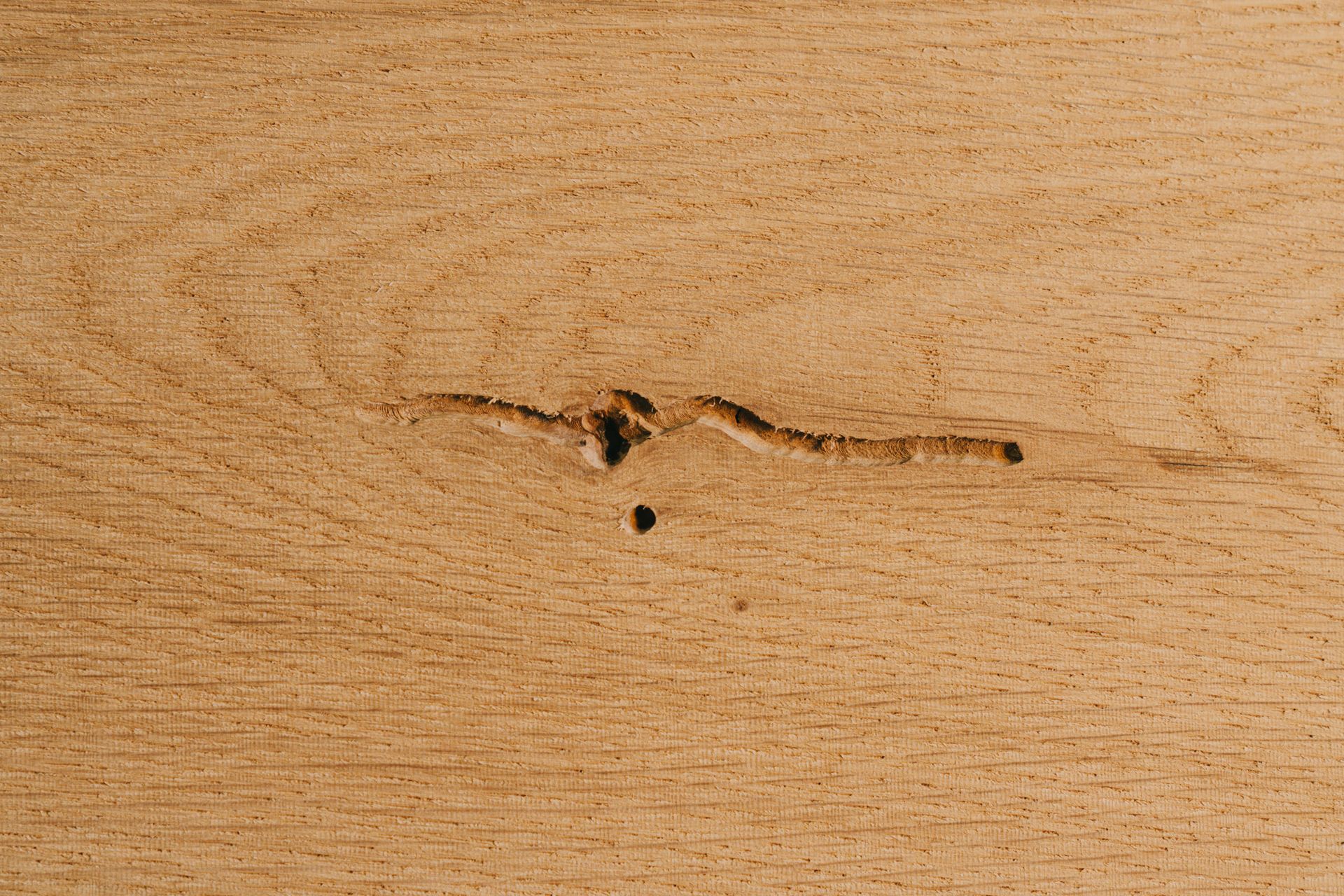

Open knot in oak: filled with CosmetiWood MAX, sanded and ready for finishing.
More of the tree, none of the compromise.
Character wood filled and finished as one system is a sustainability story your architects can sell, and a margin story you can.
Common questions
Why is rustic parquet more expensive to produce than it looks?
The wood is cheaper, but it needs far more filling than prime grades, so filler performance (waste, shrinkage, rework) dominates the cost. With the right system, character grades still come out ahead: more of the tree is used and the product sells premium.
How do I sell rustic parquet against prime grade?
As character, not as compromise: more of every tree used (a genuine sustainability story for architects), a look prime grade cannot offer, and, with flawless filling and finishing, the same technical quality.
Does CosmetiWood work under natural oil and lacquer?
MAX and PRO are engineered for adhesion of finishing products on top of the fill. For rustic programmes we align the filler and coating as one validated system, ask us about coating partnerships.
Get this right on your own line.
Industrial wood filling solutions: own R&D and production in Dessel, Belgium, with more than 30 years of machine building for the wood industry behind it.
Contact
office@cosmetiwood.com+32 14 37 77 52Contact usStenehei 30/7
2480 Dessel, Belgium
VAT BE0451 447 797
The method
Grade and map the defects
Knots, checks and open cracks each fill differently. A traditional rustic grade takes about 30 g/m² on average; extreme character grades need more, which is exactly why waste percentage matters so much here.
Fill deep defects properly
Large knots need a filler with body that cures without shrinking, a sunken knot in a finished floor is the most expensive rework there is.
Choose the look, then sand
A colour-matched filler blends into the grain; a darker filler turns knots into deliberate accents. Either way it must sand flush with the wood. We make colours to order.
Finish as a system
Filler and coating must be tuned: adhesion of the finish over large filled areas is what makes a rustic floor read as premium. We develop this together with coating partners.
Why fills fail
Sunken knots
Shrinkage in deep fills shows weeks later, in the customer's living room.
Colour mismatch
Stock filler against fresh production wood: the repair looks like a mistake instead of a choice.
Batch fallout
A board reworked after finishing rarely matches its batch again, the real cost is the board, not the putty.
Before and after: the difference the filler makes
Open knot in oak: filled with CosmetiWood MAX, sanded and ready for finishing.
More of the tree, none of the compromise.
Character wood filled and finished as one system is a sustainability story your architects can sell, and a margin story you can.
Common questions
Why is rustic parquet more expensive to produce than it looks?
The wood is cheaper, but it needs far more filling than prime grades, so filler performance (waste, shrinkage, rework) dominates the cost. With the right system, character grades still come out ahead: more of the tree is used and the product sells premium.
How do I sell rustic parquet against prime grade?
As character, not as compromise: more of every tree used (a genuine sustainability story for architects), a look prime grade cannot offer, and, with flawless filling and finishing, the same technical quality.
Does CosmetiWood work under natural oil and lacquer?
MAX and PRO are engineered for adhesion of finishing products on top of the fill. For rustic programmes we align the filler and coating as one validated system, ask us about coating partnerships.
Get this right on your own line.
Industrial wood filling solutions: own R&D and production in Dessel, Belgium, with more than 30 years of machine building for the wood industry behind it.
Contact
office@cosmetiwood.com+32 14 37 77 52Contact usStenehei 30/7
2480 Dessel, Belgium
VAT BE0451 447 797